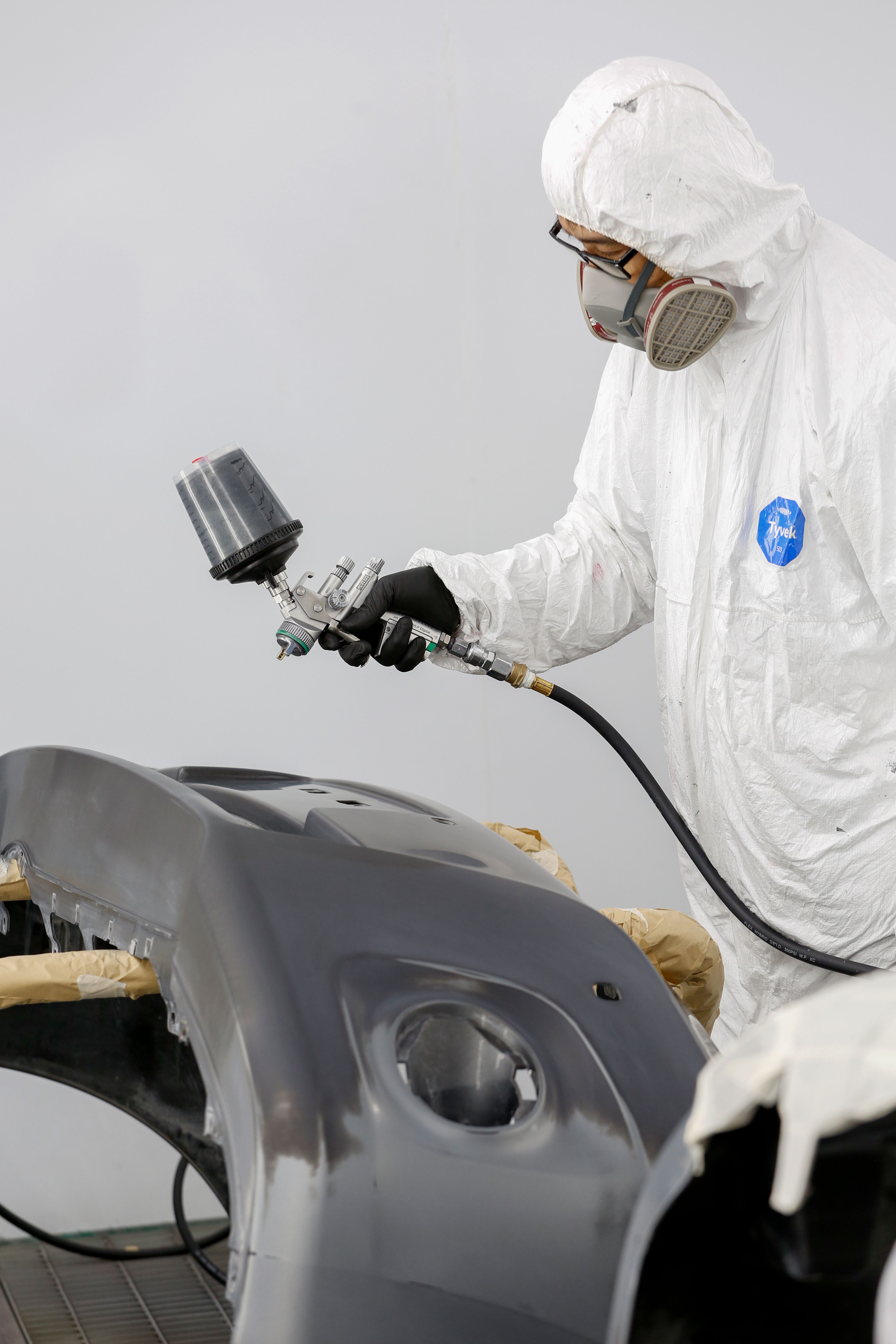
Tools that integrate with CCC ONE and Mitchell to automate customer review requests at vehicle pickup, protect your DRP relationships, and win more customer-choice insurance jobs.
Every customer filing an insurance claim has the legal right to choose their own repair shop. Whether they exercise that right - and whether they choose your shop over the insurer's recommended facility - comes down almost entirely to your online reputation.
Nearly nine in ten auto body customers read reviews before deciding where to take their vehicle, including customers who were initially directed to an insurer-preferred shop but researched alternatives before authorizing the repair.
Auto body shops with ratings below 4.5 stars consistently lose customer-choice insurance jobs to higher-rated competitors. Customers making a claim on a $20,000+ vehicle are not willing to accept a shop with a 3.9-star average regardless of insurer pressure.
Insurance companies evaluate Google ratings and review volume as part of DRP program approval and renewal. Shops with fewer than 150 reviews are frequently passed over in favor of competitors with stronger and more consistent customer satisfaction records.
Auto body shops using automated review requests at vehicle pickup collect roughly three times more reviews than shops relying on service writers to ask manually - with pickup day requests converting at a significantly higher rate than any other timing.
The three largest auto insurers in the US operate formal Direct Repair Programs that funnel customers to approved shops. All three evaluate online reputation as part of their approval and renewal process.
State Farm's Select Service network is the largest DRP program in the US. Participation requires consistent customer satisfaction scores and a documented quality management process. Google review volume and rating are factored into shop performance evaluations.
GEICO's ARX program prioritizes shops with strong online reputations and high customer satisfaction survey scores. ARX shops receive direct customer referrals from GEICO claims adjusters - a significant volume driver for participating facilities.
Allstate's Good Hands network evaluates shop reputation as part of initial approval and ongoing renewal. Shops with declining review trends or unresolved negative reviews face renewal risk regardless of repair quality metrics.
Progressive's Service Center network directs customers to approved facilities and evaluates satisfaction metrics quarterly. Online review consistency is used alongside internal satisfaction surveys to assess shop performance.
Unlike emergency service trades where jobs close in hours, auto body repairs span days or weeks. Understanding where review requests convert best across the repair timeline prevents you from sending requests too early or missing the peak window entirely.
Customer is anxious about the repair and uncertain about the outcome. No review request should be sent at this stage - satisfaction is not yet established.
Customer is waiting and may be anxious about timeline and rental coordination. Proactive status updates during this period reduce negative review risk significantly.
Extended repairs requiring supplement approvals are the highest-risk period for negative reviews. Proactive communication about delays is the most effective prevention tool.
The customer has their vehicle back, the repair looks right, and the ordeal is over. This is the highest-converting review moment in the entire auto body customer journey. Request fires 60-90 minutes after pickup confirmation.
A second request for customers who did not respond at pickup. Customers who have driven the vehicle and confirmed the repair quality are also motivated to share their experience at this stage.
The emotional arc of an auto body repair ends with relief and satisfaction. The customer drove in with a damaged vehicle and is driving away with a restored one. That moment - combined with the natural gratitude of having the stressful process behind them - creates the highest review motivation of any point in the customer journey.
Connecting Review Dingo to CCC ONE allows your review requests to trigger automatically when a job status changes to "vehicle delivered" in your shop management system. No service writer action is required - the request goes out while the customer is still in the parking lot or on the drive home.
Most auto body shops focus their review strategy on getting more positive reviews. The faster path to a higher average rating is stopping the negative ones at their most common source.
When a customer files an insurance claim and brings their vehicle to your shop, they are trusting you to handle a complex process on their behalf. When supplement approvals stall, when insurers underpay, or when repairs take longer than expected, customers do not always blame the insurance company. They blame the shop - and they leave reviews saying so.
The most damaging negative reviews in the auto body category come from customers who felt uninformed during a delayed repair, surprised by a bill they did not expect, or frustrated by what they perceive as the shop siding with the insurer rather than advocating for a complete repair. Intercepting these complaints before they reach Google is as important as generating new positive reviews. Here is what that requires:
The best review tools for auto body shops connect directly to your shop management system so review requests fire automatically at vehicle pickup - no service writer action required.
When evaluating review platforms for your auto body shop, confirm whether the integration with CCC ONE or Mitchell is native or API-based. Native integrations trigger review requests automatically when job status changes to vehicle delivered. API-based connections may require additional setup or a third-party connector. Review Dingo supports integrations with CCC ONE and Mitchell RepairCenter and can advise on the correct configuration for your shop management workflow.
Every tool below was evaluated on shop management integrations, CarWise and DRP-relevant platform coverage, negative review intercept capability, and pricing for independent shops and multi-location groups.
| Tool | Starting price | CCC ONE integration | CarWise monitoring | Negative review intercept | Yelp / BBB | Best for |
|---|---|---|---|---|---|---|
| Review Dingo Top Pick | $199/mo | ✓ | ✓ | ✓ | ✓ | Independent and group collision shops |
| Birdeye | $299/mo | ✓ | ✓ | ✓ | ✓ | Multi-location auto body groups |
| Broadly | $199/mo | Via API | Partial | ✓ | ✓ | Auto body and service shops combined |
| Podium | $249/mo | ✗ | ✗ | ✓ | Partial | Text-first customer communication |
| NiceJob | $75/mo | ✗ | ✗ | ✗ | ✗ | Budget-conscious independent shops |
| Grade.us | $110/mo | ✗ | ✗ | Partial | ✓ | Agencies managing auto body clients |
Here is what you need to know about each platform before committing to a monthly subscription for your auto body or collision repair shop.
Review Dingo is the strongest choice for auto body shops that want consistent Google and CarWise review volume without adding a step to the service writer workflow. The platform integrates with CCC ONE and Mitchell RepairCenter to fire automated SMS review requests when a vehicle is marked delivered - the highest-converting moment in the entire auto body customer journey.
For collision shops specifically, Review Dingo covers the platforms that matter most for both customer-choice insurance jobs and DRP program standing - Google, CarWise, Yelp, Facebook, and BBB - from a single dashboard. The negative review intercept is particularly critical for auto body shops where supplement disputes and repair delays are the most common source of damaging reviews. Routing dissatisfied customers to an internal feedback form before they reach Google protects your rating during the long repair cycles that create the most complaint risk.
Birdeye is the enterprise-grade option for multi-shop operators and collision repair networks that need centralized reputation management across every location from a single login. It covers 200+ review platforms including CarWise, connects natively with CCC ONE, and provides location-level reporting alongside network-wide DRP performance benchmarking. Independent shops and single-location operators will find the per-location pricing difficult to justify when a focused tool delivers equivalent results at lower cost.
Broadly is built specifically for automotive service and body shops, which gives it more relevant default configurations than general-purpose review tools. It supports shop management system connections, includes a negative review intercept, and covers Yelp and BBB alongside Google. The limitations for dedicated collision shops are partial CarWise coverage and CCC ONE connections running through an API rather than a native integration, which adds setup complexity compared to Review Dingo.
The collision shops dominating Google Maps and CarWise in their market have review systems built around the specific timing and risk points of the auto body customer journey. Here is how they do it.
Connect Review Dingo to CCC ONE and set a review request to fire 60-90 minutes after a job is marked vehicle delivered. The customer is still in the satisfaction window from picking up their restored vehicle - before rental car returns, insurance paperwork, and daily life pull their attention away.
Insurance customers directed through DRP programs frequently leave CarWise reviews alongside or instead of Google reviews. A strong CarWise rating is directly tied to your DRP program standing and referral volume from claims adjusters. Review Dingo monitors CarWise alongside all other platforms from one dashboard.
When a repair takes longer than expected or a supplement dispute creates customer frustration, Review Dingo's negative review intercept routes the dissatisfied customer to an internal feedback form. This gives your service manager the chance to make contact before the complaint becomes a public one-star review.
The most effective way to prevent negative reviews during extended repairs is proactive status communication - not waiting for the customer to call and ask. Customers who receive unprompted updates during a two-week repair are significantly less likely to leave a negative review even when timelines slip.
Insurance adjusters evaluating shops for DRP programs look at review response rates alongside star ratings. A shop that responds professionally to every review - including negative ones about supplement disputes - signals active quality management that supports DRP approval and renewal.
A lifetime repair warranty is the single most cited trust attribute in five-star auto body reviews. When responding to positive reviews that mention quality or workmanship, reinforcing your lifetime warranty in the response turns every reply into a conversion asset for prospective customers reading your review profile.
Review Dingo integrates with CCC ONE and Mitchell to trigger review requests automatically when jobs are closed. Set up your auto body shop in under an hour with a 7-day free trial.
Start Your Free Trial →This site contains affiliate links. If you purchase through our links, we may earn a commission at no extra cost to you. All recommendations are based on independent research.